What is a
dysfunctional family
really?
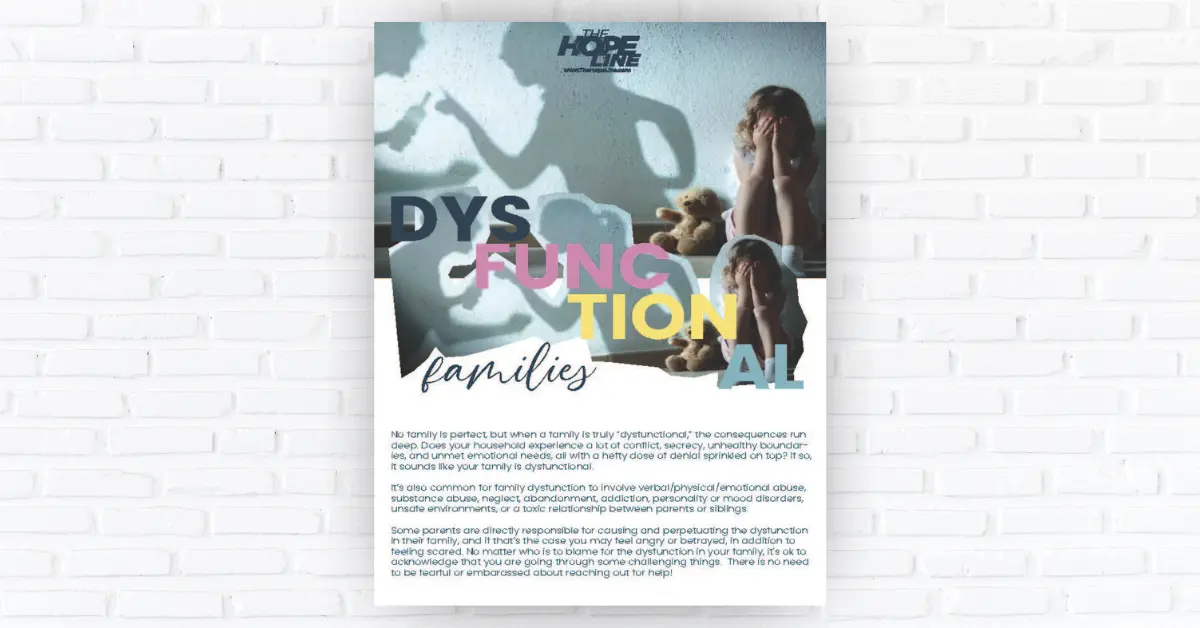
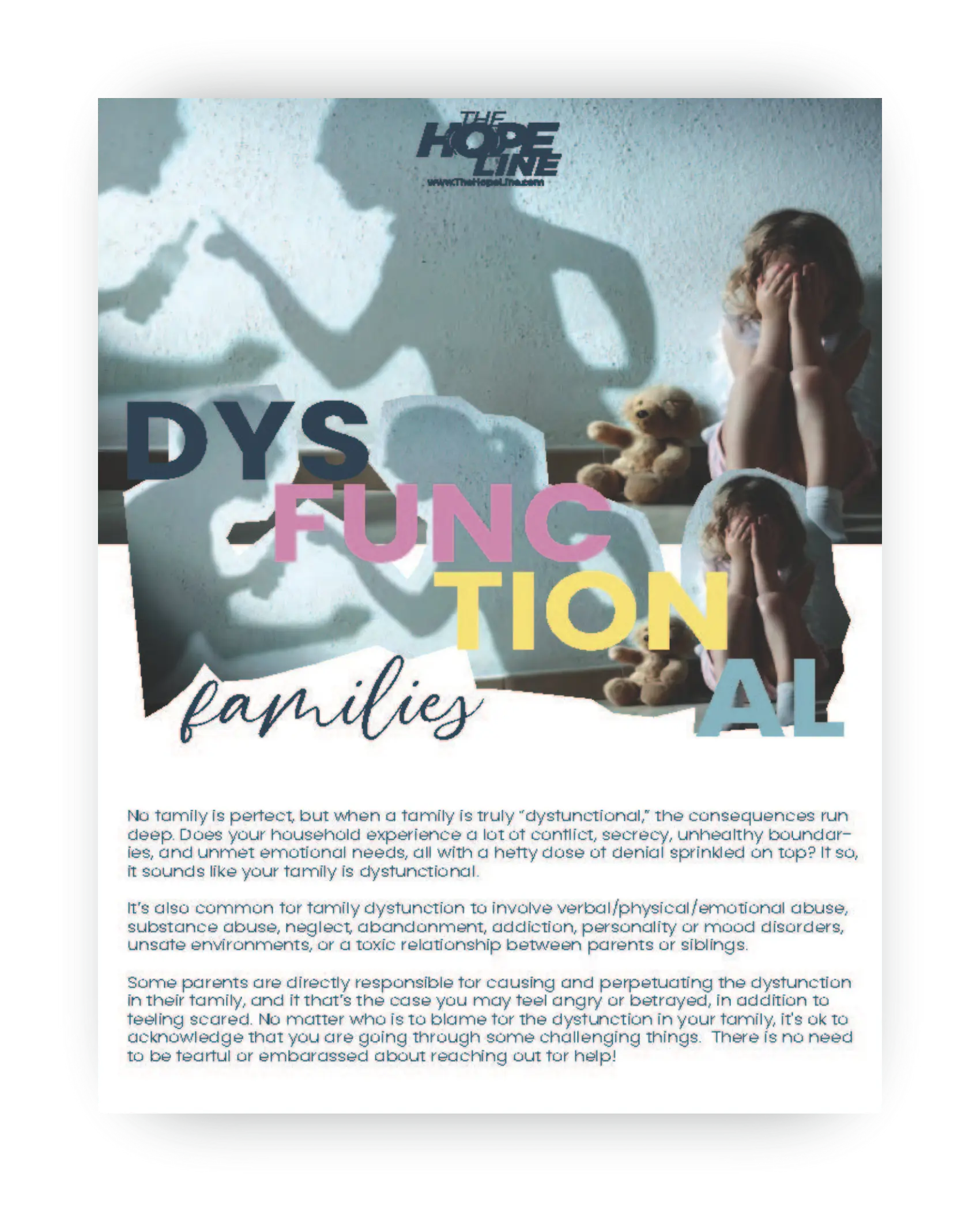
Every family has conflict and imperfection — that’s normal. A dysfunctional family is something more: a pattern of behavior where conflict, neglect, control, addiction, abuse, or emotional chaos is the ongoing norm rather than the exception. In a dysfunctional family, the basic things a family is supposed to provide — safety, support, love, healthy communication — are missing, inconsistent, or come with strings attached.
If you grew up in this, you may not even realize it, because it’s the only “normal” you’ve known. You might minimize it (“it wasn’t that bad”) or assume every family is like yours. Recognizing dysfunction isn’t about blaming or hating your family — it’s about being honest, so you can heal and break patterns instead of passing them on.
What does family dysfunction feel like?
Dysfunction takes many forms, but some common signs include:
Walking on eggshells, never sure what mood or reaction you’ll get
Communication that’s built on yelling, silence, guilt, or manipulation
A parent’s addiction, untreated mental illness, or volatility running the household
Love that felt conditional, earned, or withheld
Boundaries that were ignored, or never allowed to exist
Feeling more like a caretaker or referee than a kid
If these resonate, it doesn’t mean your family is evil or that you have to cut everyone off. It means you grew up carrying things you shouldn’t have had to — and that’s worth tending to.
Why do families become dysfunctional?
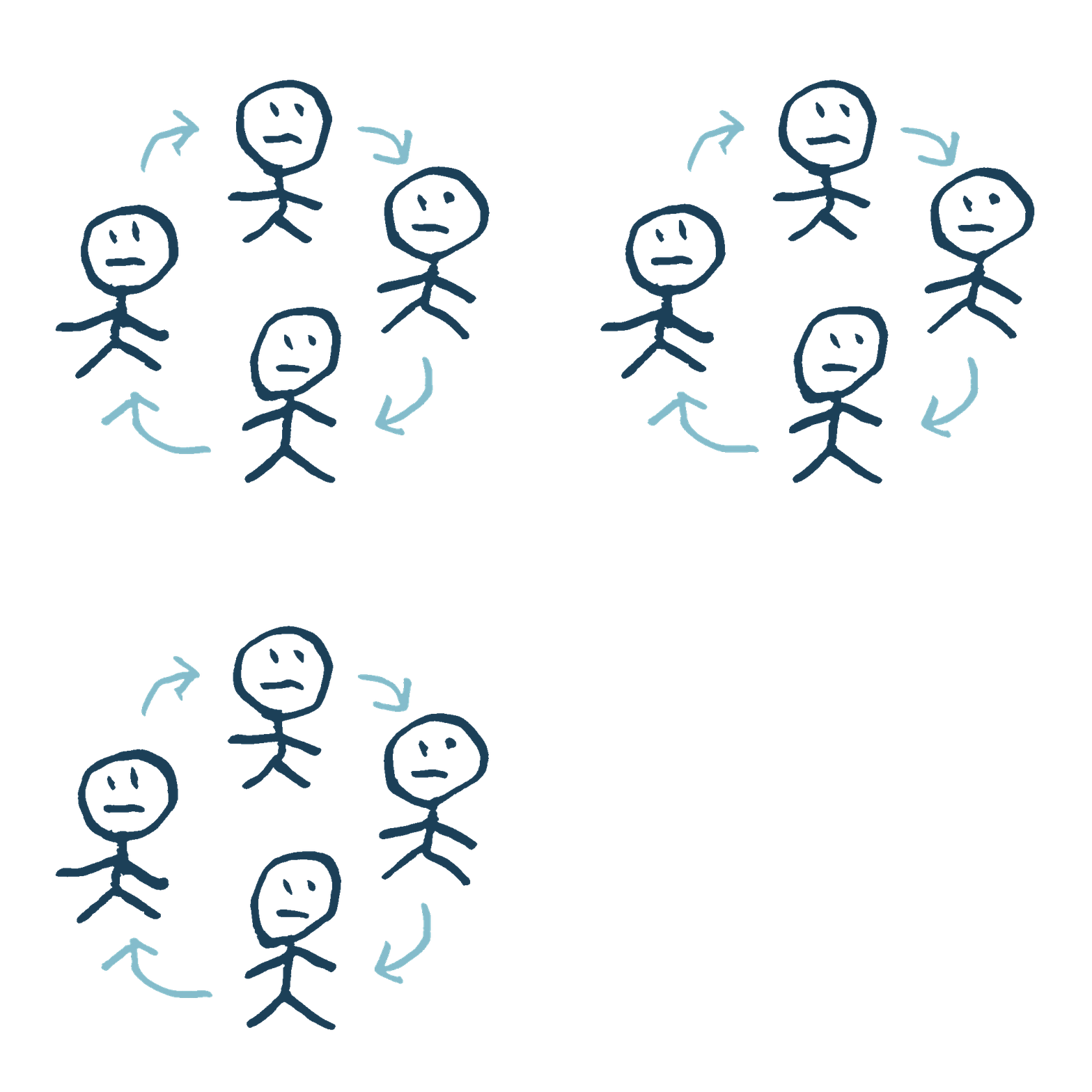
Dysfunction is usually passed down. Parents who didn’t get healthy love, safety, or skills tend to repeat what they knew, often without realizing it. Add in addiction, untreated mental illness, trauma, financial stress, or their own unhealed wounds, and unhealthy patterns take root and get handed to the next generation.
This doesn’t excuse harm, but it does explain it — and explaining it helps you stop taking it personally. The dysfunction you grew up in was not your fault and not a reflection of your worth. Understanding the cycle also gives you power: patterns that were handed to you can stop with you. Many people become the ones who break generational dysfunction and build something healthier, even when their family of origin never changes.
Want to talk it through?
A Hope Coach is here right now - free, 24/7, no judgment
You're not alone in this
You can heal even if your family doesn’t. That’s a crucial truth. You don’t need your parents to apologize, change, or even acknowledge what happened in order to grow, set boundaries, and build a healthier life. A counselor or Hope Coach can help you process what you grew up with and figure out what healthy looks like — maybe for the first time.
And if family has felt like a source of pain rather than belonging, there’s something tender in this: the Bible says “God sets the lonely in families” (Psalm 68:6). Many people who didn’t get a healthy family growing up have found a sense of belonging, safety, and chosen family within a faith community — and discovered in God the steady, loving parent they always needed. You’re not stuck with only what you were born into. You’re welcome to explore that kind of belonging.
The patterns you grew up in don’t have to define your future. Reach out — you don’t have to sort this out alone.