MENTAL HEALTH

Am I okay? making sense of your mental health

If something inside feels off and you’re not sure what to call it or what to do, you’re in the right place. Let’s slow down and sort through it together.
THE BASICS

What is mental health really?

Mental health is simply the health of your mind and emotions — the same way physical health is the health of your body. Everyone has it, and just like physical health, it moves along a spectrum and changes over time. Some seasons you feel steady and resilient; others you feel overwhelmed, drained, or like you’re barely holding on. Having a hard stretch doesn’t mean something is permanently wrong with you any more than catching a cold means your body is broken.

It helps to separate two things that often get blurred. “Mental health” is your overall wellbeing, which everyone needs to tend. A “mental health condition” — like anxiety, depression, or PTSD — is a specific, diagnosable struggle that many people experience and that responds to care. You don’t need a diagnosis for your struggle to be real or to deserve support. If your mind and emotions are hurting, that counts, full stop. Taking your mental health seriously isn’t weakness or self-indulgence — it’s as wise and normal as taking care of your body.
What does it feel like when you're struggling?
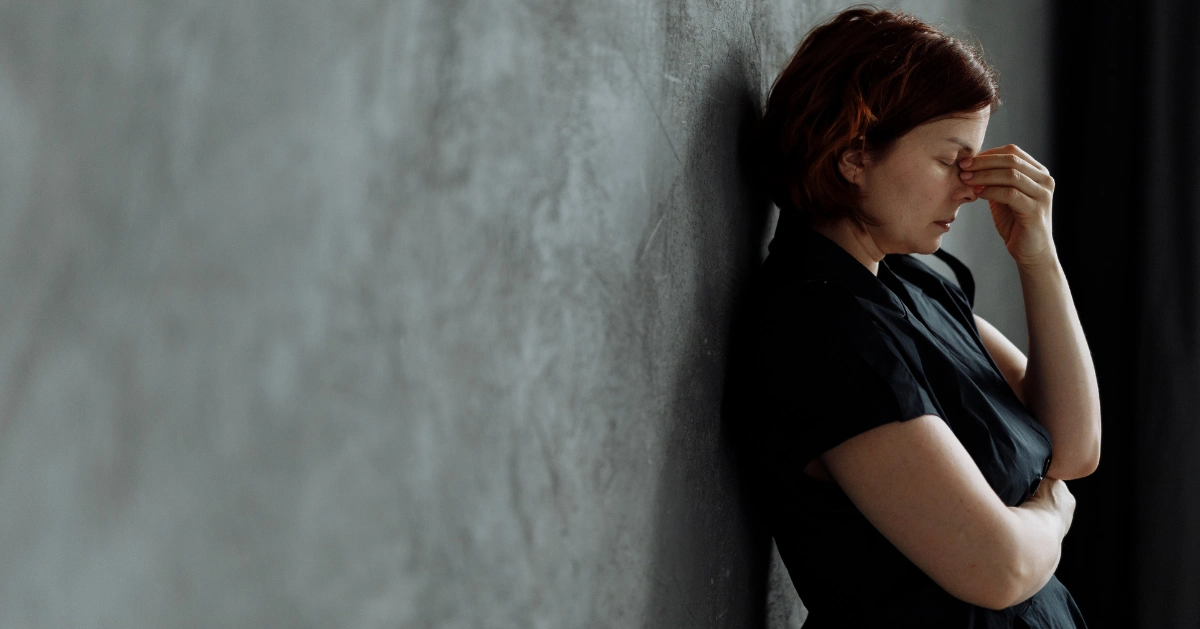
Mental health struggles don’t always look dramatic. Often they show up quietly, in ways that are easy to dismiss or explain away. You might notice some of these:
Persistent sadness, anxiety, emptiness, or numbness that won’t lift
Losing interest in things you used to enjoy
Feeling overwhelmed, on edge, or unable to cope with normal life
Turning to unhealthy ways of coping just to get through
Changes in sleep, appetite, or energy — too much or too little
Pulling away from people, or feeling isolated even around them
Difficulty concentrating, deciding, or remembering
Feeling worthless, hopeless, or like a burden
You don’t have to check every box, and you don’t have to wait until things feel unbearable. If several of these have stuck around or started getting in the way of your daily life, that’s a meaningful signal worth paying attention to — not a reason to panic, but a reason to reach out. And if you’re ever having thoughts of harming yourself or that you’d be better off gone, please reach out for help right away — to a crisis line, a trusted person, or a Hope Coach. You matter, and support is available this moment.
Why do mental health struggles happen?

There’s rarely a single, simple cause — and none of the causes mean you’re weak or that you did something wrong. Mental health is shaped by a mix of factors working together: biology (brain chemistry, genetics, hormones), life circumstances (stress, loss, relationships, money, big transitions), past experiences (trauma, how you were raised, wounds you’re still carrying), and the steady pressures of modern life — comparison, isolation, a world that never seems to slow down.

Often several of these stack up at once, which is exactly why “just think positive” or “snap out of it” doesn’t work and isn’t fair. Understanding this matters because it lifts the blame and points toward real help. The most important thing to know is this: mental health struggles are common, they are not a character flaw or a failure of faith, and they are treatable. With the right support — which can include talking to someone, healthy rhythms, community, professional help, and sometimes medication — things genuinely get better. Where you are right now is not where you have to stay.

Want to talk it through?
A Hope Coach is here right now - free, 24/7, no judgment
You're not alone in this

Mental health struggles are isolating by nature — they whisper that you’re the only one, that no one would understand, that you should be able to handle it on your own. None of that is true. So many of the people around you are quietly carrying something similar, and reaching out — to a friend, a counselor, a trusted adult, or a Hope Coach — isn’t weakness. It’s one of the bravest and most important things you can do. You weren’t meant to carry this alone, and you don’t have to figure out everything at once. The next step can simply be letting one person in.

There’s also a deeper steadiness on offer. God isn’t distant from your struggle or disappointed by it — he draws especially close to people who are hurting, and he doesn’t ask you to have it all together before you come to him. As the psalmist wrote, even when everything inside feels like it’s failing: “My flesh and my heart may fail, but God is the strength of my heart and my portion forever” (Psalm 73:26). Faith isn’t a replacement for the help you may need — it walks alongside it — but for many people it has been a quiet anchor when their own strength ran out. You’re welcome to bring your honest, unpolished self, doubts and all.

Whatever you’re facing, you don’t have to face it alone — today or any day. Reach out whenever you’re ready; we’re here, and there is real hope.

FAQ

Frequently asked questions

These are some of the most common questions people have about mental health. If you have more questions, please feel free to reach out to a Hope Coach.

How do I know if I’m struggling with my mental health?
Watch for changes that stick around — persistent sadness, anxiety, numbness, loss of interest, trouble sleeping or eating, pulling away from people, difficulty functioning, or feeling hopeless. You don’t need a diagnosis or a crisis for it to count. If something feels off and it’s lasting or getting in the way of daily life, that’s reason enough to reach out.
What’s the difference between mental health and a mental health condition?
Mental health is your overall emotional and mental wellbeing — everyone has it, and it changes over time. A mental health condition, like anxiety or depression, is a specific, diagnosable struggle that many people experience and that responds to care. You can struggle with your mental health without having a diagnosed condition, and either way your struggle is real and deserves support.
Is struggling with my mental health a sign of weakness or weak faith?
No. Mental health struggles come from a mix of biology, circumstances, and experiences — not a character flaw, a lack of willpower, or a failure of faith. Many strong, faithful people struggle. Seeking help is wise and courageous, the same way you’d see a doctor for a physical health problem.
How can I take care of my mental health?
Foundational habits help: consistent sleep, movement, time outside, and nourishing food. Beyond that, stay connected to people, set healthy boundaries, process your emotions instead of burying them, limit what drains you (like endless scrolling), and ask for help when you need it. If you’re really struggling, talking to a counselor or Hope Coach is a strong next step.
Where is God when I’m struggling mentally?
Close, even when he feels far away. God draws near to people who are hurting and doesn’t require you to have it together first. Faith isn’t a substitute for the help you may need — it walks alongside it — but many people find it a steady anchor when their own strength runs out. A Hope Coach would be glad to listen and, if you’d like, pray with you. If you’re having thoughts of harming yourself, please reach out for help right away.

Take this with you.

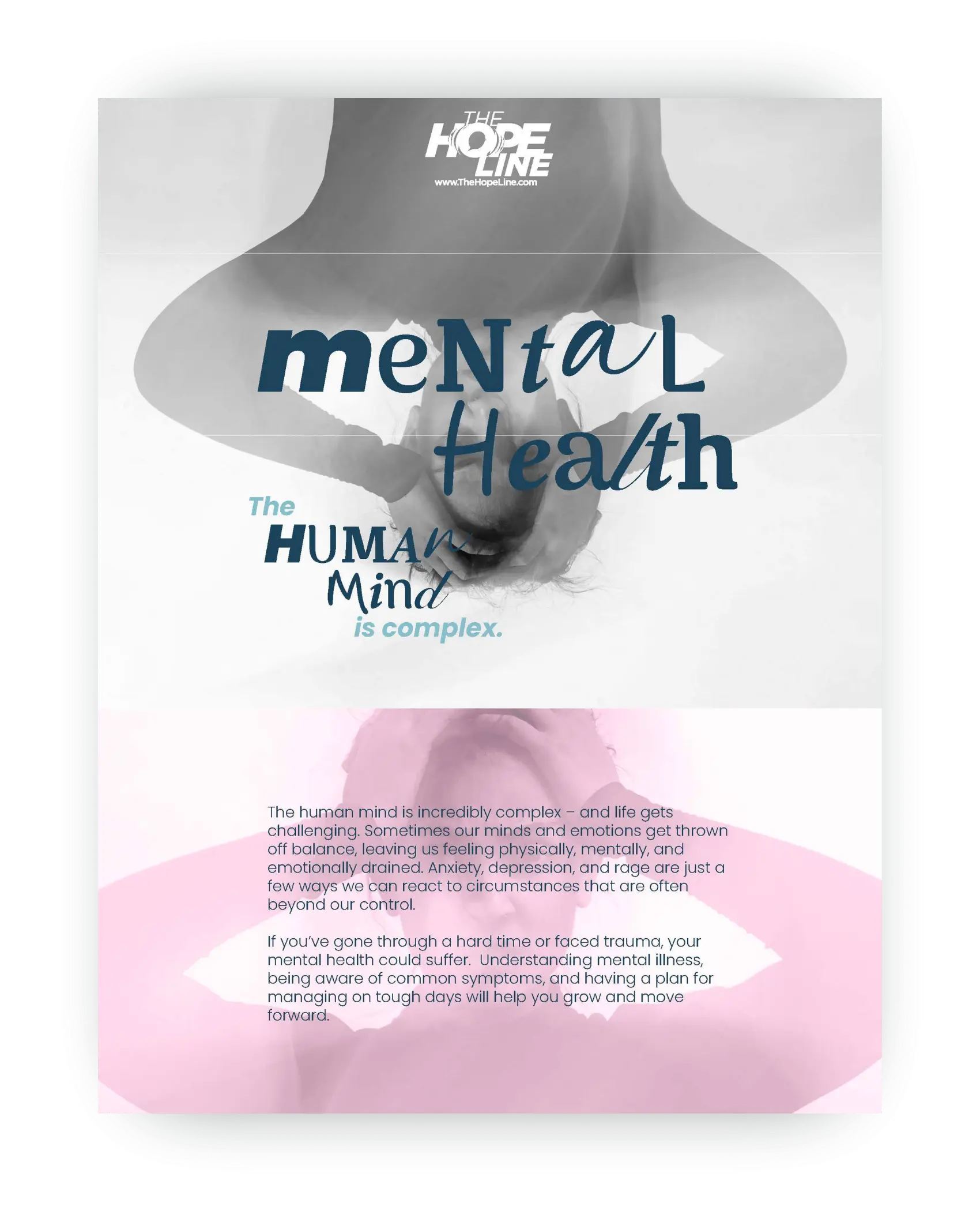
We made a free guide that walks you through what mental health really means, signs to watch for, and small steps that genuinely help. No fluff, no clinical jargon — just real, encouraging stuff written for you.
RESOURCES FOR YOU

More to explore

Helpful articles, resources, guides, and related topics.

Tired of The Problem?

Try the Solution.

Privacy Policy / Terms of Use
© 2026 TheHopeLine, Inc. Registered 501(c)(3). EIN: 20-1198064